What sets apart a pro numismatist from a newcomer? The strongest collectors follow a clear, step-by-step path that blends education, practice, and intentional growth. They know tiny details in defining the Lincoln Wheat Penny value, negotiating with dealers, and searching for the best spots to buy. You can go from a newbie to a pro by following these 6 steps one-by-one.
Step 1 — Learn the Basics Through Trusted, Accessible Resources
Every advanced collector starts by understanding the language of numismatics. The most reliable foundation comes from widely respected educational platforms and beginner-friendly references.
What to Study First
- Grading terminology: Learn the purpose of the Sheldon 1–70 scale and how it influences coin value.
- Coin anatomy: Practice identifying rims, fields, relief, devices, and mint marks.
- Metal composition: Recognize copper, nickel, silver, and clad variations used across eras.
- Storage principles: Use safe, inert materials to prevent damage from humidity or PVC.
The American Numismatic Association’s free eLearning resources are ideal for structured learning. Their modules on grading, safe handling, and coin identification help beginners spot problems like scratches, cleaning marks, or corrosion long before money is spent.
Pair this with the Red Book (“A Guide Book of United States Coins”), which gives concise history, mintage data, and baseline pricing for U.S. types. These are essential tools for understanding scarcity and market behavior.
Early Skill-Building Exercises
- Sort through your own pocket change to practice identifying dates, errors, or mint marks.
- Compare worn coins to high-resolution grading photos online.
- Join a local coin club to attend beginner workshops and observe others’ collections.
Hands-on exposure builds confidence faster than reading alone, and each small discovery reinforces the fundamentals.
Step 2 — Build a Starter Collection With Clear Goals
Once you understand basic terminology and grading structure, begin assembling a small, affordable collection. The goal is practice — not investment. Choose themes that allow you to gather multiple examples cheaply so you can learn how wear patterns, toning, and strike weakness vary across coins.
Recommended Beginner-Friendly Themes
- Lincoln cents
- State quarters
- Jefferson nickels
- World coins bought in bulk
- Pre-1965 silver found in circulation or low-cost lots
Most of these are available for under a dollar each in circulated condition. Build toward a 50-coin starter set in albums or flips, making notes about condition and any anomalies you see, logging them into the coin identifier app free. Over time, these observations sharpen your ability to estimate value and identify true standouts.
Where to Source Affordable Coins
- Bank rolls
- Local coin shops
- Small eBay lots with clear photos
- Community coin shows
Record each purchase in a notebook or spreadsheet. Tracking how you acquired a coin, what you paid, and how you judged its condition builds strong habits early.
Helpful Beginner Tools
A few inexpensive tools improve accuracy dramatically and prepare you for advanced steps later.
| Tool | Purpose | Cost |
| Red Book | Pricing & history | $15–20 |
| 10× Loupe | Inspect details, mint marks, and surface issues | $10 |
| Coin Albums | Organize and track progress | $5–15 |
| Scale & Calipers | Confirm weight and diameter for authenticity | $20 |
These small investments make your early learning far more structured and reduce the chances of misidentifying varieties or buying damaged coins.
Step 3 — Master Identification Skills Through Consistent Practice
Identification is central to numismatics. Advanced collectors rely on visual accuracy, precise measurements, and reference verification. The more coins you study, the faster your eye adapts to subtle differences that signal value or potential problems.
Key Identification Techniques to Master
- Mint marks: Learn how placement and style vary across decades.
- Variety recognition: Look for doubled dies, repunched mint marks, wide/narrow dates, and small design shifts.
- Metal and weight checks: Compare weight and diameter to official specifications.
- Example: a 90% silver quarter should weigh about 6.25 g.
- Edge examination: Identify reeded, plain, or lettered edges and look for anomalies that reveal errors or counterfeits.
A 10× loupe and a small digital scale offer immediate insight. Many seasoned collectors rely on this routine before even considering price or rarity.
Digital Support for Faster Identification
Modern tools complement hands-on work. The Coin ID Scanner app helps collectors confirm details quickly by identifying coins through a photo. It returns data such as mint years, country, composition, diameter, weight, and estimated price. For beginners building identification confidence, its extensive database and AI Coin Helper reduce uncertainty and speed up attribution.

Step 4 — Dive Into Grading and Begin Understanding Certification
Grading is the skill that creates the largest gap between beginners and advanced collectors. A one-point difference on the Sheldon Scale can represent substantial shifts in value, so accuracy is essential.
How to Build Strong Grading Ability
- Use ANA videos and publications to see real-world grading demonstrations.
- Compare your coins to certified examples from PCGS and NGC photo archives.
- Study the effects of circulation: Flattened details, luster breaks, and rim wear indicate specific grade ranges.
- Assess surface quality: Look for contact marks, nicks, or hairlines that lower the grade.
Practicing with raw coins first helps you learn without the bias of a printed grade on a slab.
When to Consider Third-Party Certification
Certification adds liquidity and market trust. Once you begin acquiring pieces with stronger potential — key dates, low-population varieties, or higher-grade silver — submitting coins to PCGS or NGC can secure long-term value.
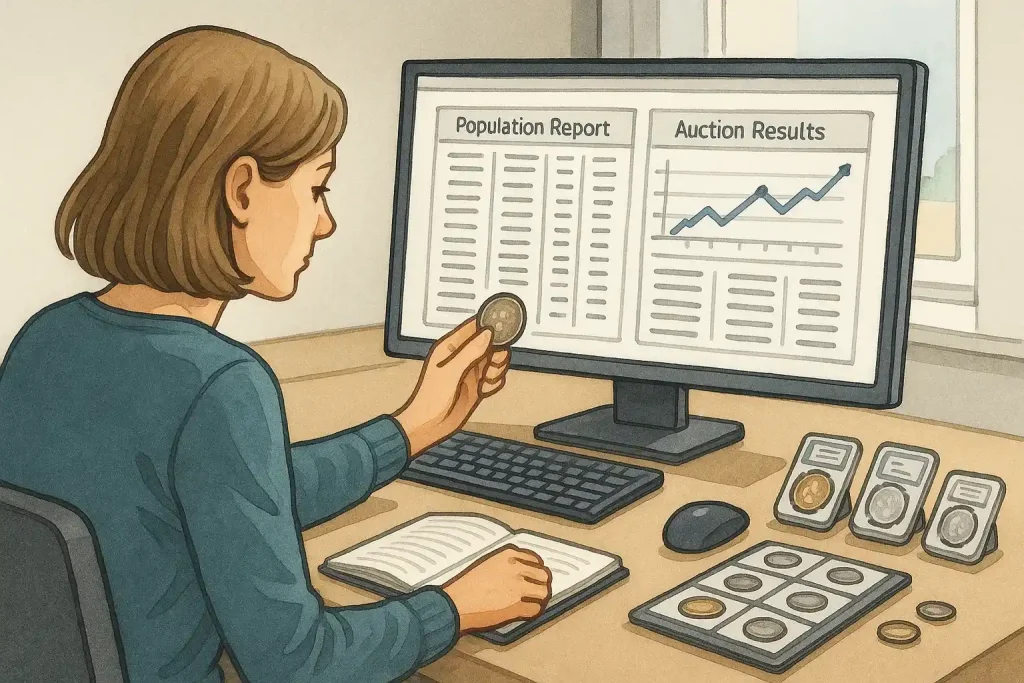
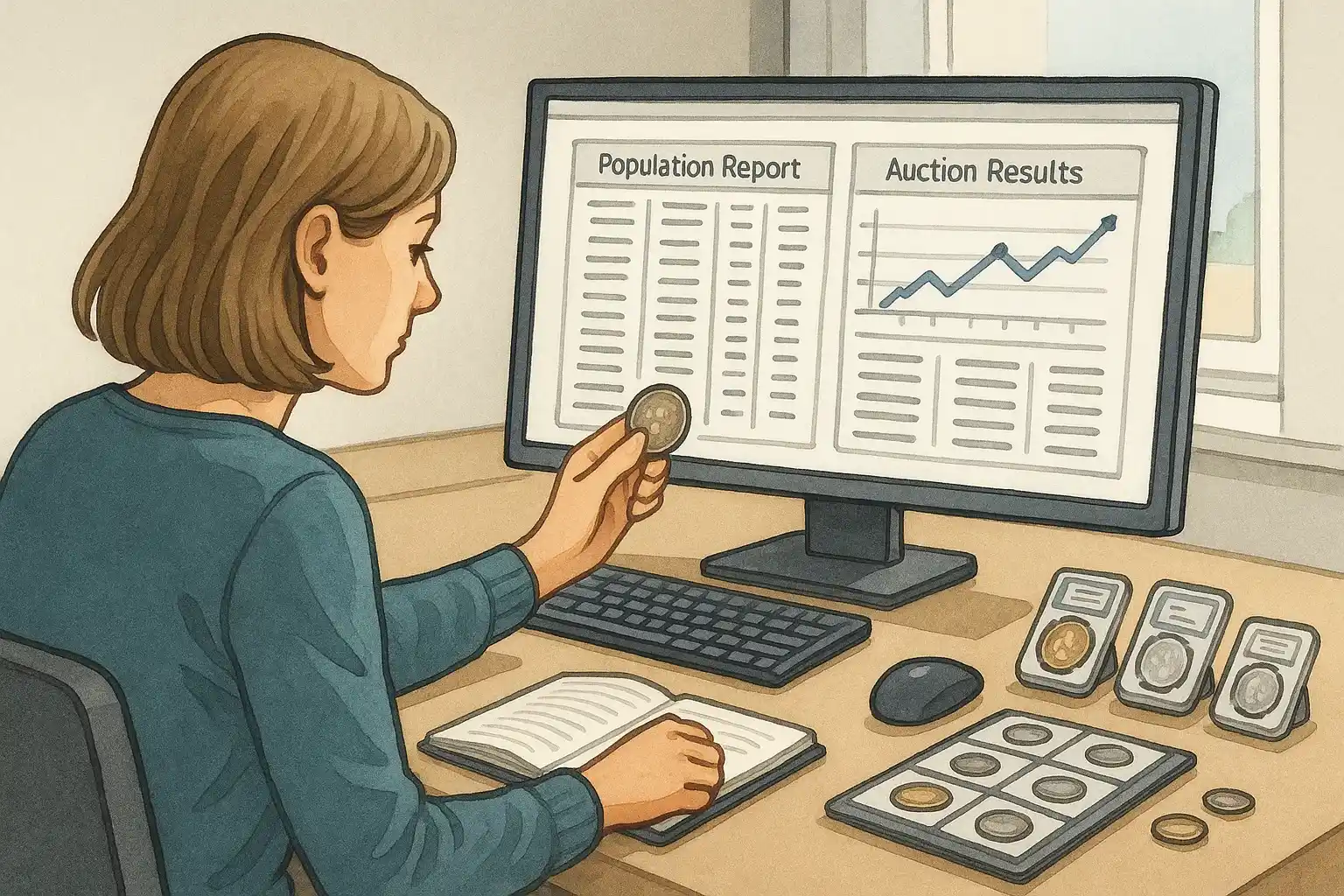
Understanding population reports is also crucial. These reports show how many coins exist at each grade:
- Low populations often justify premiums.
- High populations point to competitive markets where grading accuracy becomes critical.
Tracking these trends teaches you to spot undervalued grades and identify coins that may benefit from professional submission.
Strengthening Your Intermediate Toolkit
Collectors entering this stage often expand their tools beyond basic beginner equipment.
Useful Additions:
- Photographic setup or phone stand for documenting coins
- LED desk lamp with adjustable angles
- Soft coin trays for side-by-side grading comparisons
These tools support deeper study, prevent accidental damage, and help you form consistent grading habits.
Step 5 — Engage With Markets and Build a Reliable Network
Advanced collectors don’t operate in isolation. They rely on consistent exposure to real-world pricing, dealer insights, and live trading environments. Market engagement teaches you how coins move, how demand changes, and how buyers behave.
How to Strengthen Your Market Skills
- Attend coin shows: Walk bourse floors, compare prices, and study how dealers grade and describe their inventory.
- Watch auction trends: Platforms like Heritage Auctions and Stack’s Bowers reveal real demand and realistic sale ranges.
- Track wholesale pricing: Tools such as Greysheet help collectors identify buy points 10–20% below typical retail.
- Practice negotiation: Many dealers expect respectful discussion on price, especially for bulk buys or well-researched offers.
Building relationships with dealers is especially valuable. Long-term clients often gain early access to fresh material, flexible pricing, and honest assessments that sharpen intuition.
Networking Beyond the Marketplace
Online forums and collector communities provide ongoing learning:
- Participate in discussions
- Share images of your finds
- Ask for feedback on grading or attribution
These interactions accelerate your skill development far faster than solo collecting.
Step 6 — Specialize and Invest With Long-Term Purpose
The hallmark of an advanced collector is specialization — choosing a focused area and studying it until you know its history, varieties, rarities, and markets better than most. Specialization brings clarity, expertise, and financial discipline.
Popular Specialization Paths
- Morgan dollars: Study VAM varieties, mintmark differences, and strike patterns.
- Ancient coins: Focus on Roman imperial bronzes, Greek silver, or Byzantine issues.
- Error coins: Explore off-centers, clipped planchets, or doubled dies.
- Modern high-grade series: Search for condition rarities with low populations.
Specialization leads naturally toward strategic investment. Advanced collectors treat their collections as long-term projects, not spontaneous purchases.
Smart Investment Principles
- Diversify within your specialty while maintaining focus.
- Aim for 5–15% long-term returns through quality upgrades and well-timed sales.
- Sell through trusted platforms (e.g., Heritage Auctions) for higher exposure and stronger bids.
- Reinvest profits into scarcer, higher-quality examples.
Completing ANA courses or attending workshops deepens your expertise further. Many advanced collectors pursue formal ANA certifications to anchor their knowledge with recognized credentials.
The Journey From Beginner to Expert Is Built on Structure, Practice, and Purpose
Becoming an advanced coin collector is not about luck, guessing, or buying the most expensive pieces. It’s a steady progression built on:
- foundational education
- disciplined identification and grading
- smart market engagement
- consistent networking
- long-term specialization
With this structured six-step roadmap, any beginner can advance confidently. Add thoughtful use of digital tools, ongoing study, and participation in the coin-collecting community, and your portfolio will grow not only in value but in meaning.